


Choosing a logo font is not just a design detail. It is one of the first decisions that shapes how people feel about a brand. Before someone reads your slogan, explores your website, or buys your product, your logo already gives them a quick impression: modern, elegant, playful, serious, premium, handmade, bold, traditional, or something else entirely.
That is why learning how to choose a font for a logo is so important. A good logo font should match the brand personality, stay readable, work at different sizes, feel distinctive, and be safe to use according to the font license. This guide walks through a practical checklist for beginners, small business owners, and designers who want to make a more confident choice.
Why Font Choice Matters in Logo Design
A logo font does more than display a name. It communicates personality.
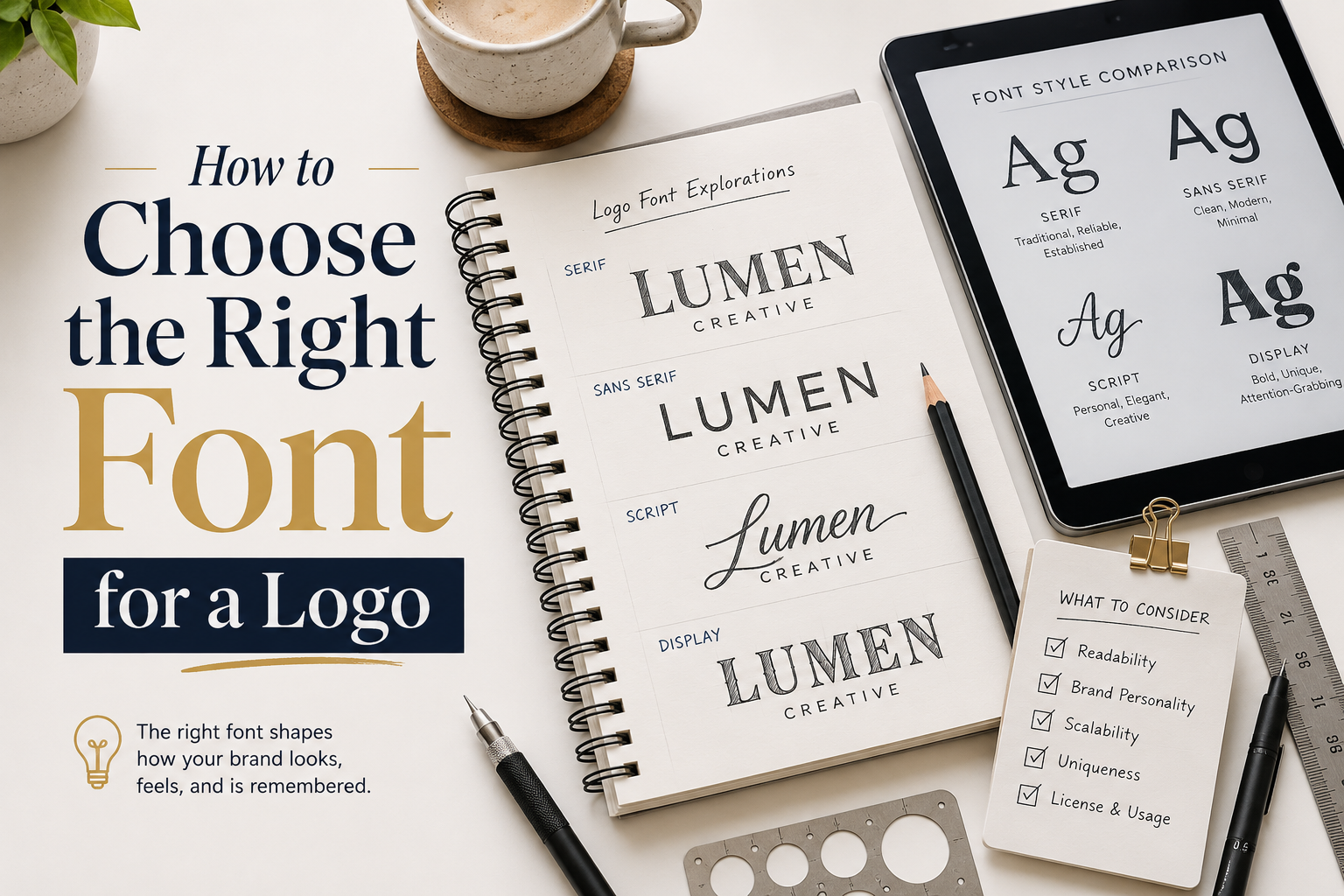
A clean sans serif font can make a brand feel modern, simple, and approachable. A serif font may create a more classic, editorial, elegant, or trustworthy impression. A script font can feel personal, romantic, creative, or handmade, but only when it remains easy to read. Display and decorative fonts can make a logo memorable, but they need to be used carefully because they can become difficult to read or too trend-driven.
The wrong font can create confusion. For example, a serious financial brand may look less trustworthy with a playful decorative typeface. A children’s brand may feel too cold if the logo uses a very formal serif. A handmade bakery might lose warmth if the font looks too corporate.
The goal is not to choose the most beautiful font in isolation. The goal is to choose the font that best fits the brand.
Start With Brand Personality
Before opening a font library, describe the brand in a few words. Is it modern, classic, bold, friendly, luxurious, artistic, minimal, playful, professional, or vintage?
This step helps narrow your options. For example:
- A modern technology brand may work well with a clean sans serif because it feels clear and efficient.
- A luxury product or editorial-style brand may benefit from a refined serif because it can suggest tradition, quality, or elegance.
- A creative studio, boutique, or personal brand might use a script or expressive display font if the letters are still readable.
- A bold entertainment or gaming brand may need something stronger and more distinctive, such as a display style.
If you are exploring by typeface category, you can start with broad groups such as serif fonts for classic styles, display fonts for more expressive logos, or even blackletter fonts for very specific historical, dramatic, or gothic branding styles. The category is only a starting point; the final choice still needs to match the actual brand.
Check Readability First
A logo must be recognized quickly. If people need extra time to understand the brand name, the font may not be the right choice.
Readability is especially important for script, decorative, blackletter, and highly stylized display fonts. These styles can look attractive, but some letters may be hard to identify. A font that looks beautiful in one word may become confusing when used in a longer brand name.
Before choosing a logo font, type the actual brand name. Do not judge only from sample text. Also test uppercase, lowercase, numbers, and symbols if they may appear in the logo, tagline, packaging, website, or social profile.
A simple test is to show the logo to someone for a few seconds, then ask what it says. If they hesitate or misread it, the font may need adjustment.
Test the Font at Small and Large Sizes
A logo rarely appears in only one place. It may be used on a website header, social media profile image, business card, invoice, product label, presentation, poster, or storefront sign.
That means the font needs to work at both small and large sizes. Some fonts look impressive in a big preview but lose detail when reduced. Thin strokes may disappear. Decorative swashes may blur together. Tight spacing may make letters look crowded.
Test the logo in practical sizes:
- Small-size tests : Check how it looks as a social media avatar, website favicon, mobile header, or small watermark.
- Medium-size tests: Try it on a business card, website hero section, email signature, or product label.
- Large-size tests: Preview it on banners, posters, packaging, or presentation covers.
A strong logo font should remain clear in all common uses. If the font only works when it is large, it may be better for posters than for a logo.
Choose the Right Font Style
Different font styles carry different signals. Understanding them helps you choose more intentionally.
Serif fonts
Serif fonts often feel classic, established, editorial, trustworthy, or elegant. They can work well for brands in publishing, law, education, luxury, fashion, consulting, or premium products. However, very thin serif details may not scale well at small sizes, so testing is important.
Sans serif fonts
Sans serif fonts usually feel clean, modern, minimal, direct, and flexible. They are often a safe choice for technology, startups, wellness brands, personal brands, and businesses that want a simple contemporary identity.
Script fonts
Script fonts can feel personal, handmade, romantic, elegant, or artistic. They are common in wedding, beauty, boutique, invitation, and creative branding. But readability matters more than decoration. If you are considering script styles, it may help to explore a guide such as best script fonts for invitations and logos while still checking each font’s license and legibility.
Display and decorative fonts
Display fonts can make a logo stand out. They are useful when a brand needs a strong visual personality. The risk is that they may become too trendy, too complex, or too hard to reuse across different materials. Use expressive fonts when the brand needs character, but avoid sacrificing clarity.
Decide Between Simple and Expressive
Simple fonts are often better when the brand needs flexibility, professionalism, or long-term use. They are easier to pair, easier to read, and usually work better across many formats.
Expressive fonts are useful when the logo needs a stronger personality. A café, creative studio, game project, event brand, or handmade product might benefit from a more distinctive font. Still, expressive does not mean unreadable. The best logo fonts balance personality and clarity.
A good rule: if the brand symbol, color, or layout is already very expressive, the font can be simpler. If the logo is mostly text, the font may need more character.
Make Sure the Logo Feels Unique
A logo font should not make the brand look like a copy of another company. Avoid choosing a font only because it reminds you of a famous brand. Inspiration is normal, but imitation can make the identity feel less original and may create legal or branding risks.
You can improve uniqueness by adjusting spacing, customizing small letter details, refining proportions, or combining the font with a simple symbol. Designers often modify letterforms carefully, but beginners should avoid over-editing unless they understand how to keep the word balanced and readable.
Use Font Pairing Carefully
Some logos include a tagline, descriptor, or secondary text. In that case, font pairing matters.
A common approach is to use one main logo font and one simpler supporting font. For example, an expressive display or script font may pair better with a clean sans serif tagline. A classic serif logo may pair well with a simple sans serif descriptor.
Avoid using too many fonts in one logo. Two is usually enough. If both fonts are decorative, they may compete with each other. The main font should lead; the supporting font should help, not distract.
Check the License Before Final Use
This step is essential. A font being downloadable does not automatically mean it is safe for logo or commercial use.
Before using any font in a business logo, read the font page and the author’s license terms. Check whether the license allows commercial use, logo use, modification, embedding, redistribution, or client work. Some fonts are for personal use only. Others may require purchasing a commercial license from the author.
For a deeper explanation, read this guide on personal use vs commercial use font licenses. When in doubt, contact the font author or choose a font with clear license terms.
Logo Font Checklist Before Finalizing
- Before you approve a logo font, check these points:
- Does the font match the brand personality?
- Is the brand name easy to read quickly?
- Does it work in uppercase and lowercase?
- Have you checked numbers and symbols if needed?
- Does it stay readable at small sizes?
- Does it still look strong at large sizes?
- Is it different enough from competitor logos?
- Does the tagline font pair well with the main logo font?
- Have you previewed the font with the actual brand name?
- Have you checked the font page and author license terms for commercial or logo use?
Common Mistakes to Avoid
- One common mistake is choosing a font only because it looks trendy. Trends change quickly, but a logo often needs to last for years.
- Another mistake is using a decorative font that looks interesting but is hard to read. A logo should be memorable, but it should not make people struggle.
- Many beginners also forget to test the logo at small sizes. A font that works on a poster may fail as a profile image or mobile header.
- Using too many fonts is another problem. It can make the logo look messy or amateur. Keep the typography focused.
- Finally, never ignore the license. Using a font in a commercial logo without proper permission can create problems later, especially for client work or business branding.
FAQ
What is the best font style for a logo?
There is no single best style for every logo. The right choice depends on the brand personality. Sans serif fonts often feel modern, serif fonts can feel classic, script fonts can feel personal, and display fonts can feel distinctive.
Should I use a decorative font for a logo?
You can use a decorative font if it fits the brand and remains readable. Avoid fonts that look good only in large sizes or make the brand name hard to recognize.
How many fonts should a logo use?
Most logos work best with one or two fonts. If there is a tagline, use a secondary font that supports the main logo font without competing with it.
Can I use any downloaded font for a business logo?
No. Always check the font license first. Some fonts are personal-use only, and some require a commercial license for business or logo use.
How do I test a logo font before using it?
Type the real brand name, test uppercase and lowercase, check numbers and symbols, preview it at small and large sizes, and compare how it looks across common uses such as websites, social media, and printed materials.
Conclusion
Choosing the right font for a logo is about more than style. A strong logo font should express the brand personality, stay readable, scale well, feel distinctive, pair properly with supporting text, and have a license that allows the intended use.
Start with the brand message, then test fonts with real words and real use cases. Avoid choosing a font only because it is trendy or decorative. The best logo font is one that feels appropriate, practical, memorable, and safe to use.